In the ever-evolving world of technology, connectivity is king. With the rise of 6GHz Wi-Fi, many are left scratching their heads, wondering if their trusty iPhone can join the party. After all, who wouldn’t want to surf the web at lightning speed without the dreaded buffering wheel of doom?
Imagine streaming your favorite shows or gaming like a pro without interruptions. The question lingers: can your iPhone handle this next-gen frequency? Spoiler alert: it’s not just about speed; it’s about whether your device is ready to embrace the future. Let’s dive into this tech conundrum and discover if your iPhone can truly tap into the 6GHz magic.
Overview of 6GHz WiFi
6GHz Wi-Fi operates in the 12GHz range, providing a new band for wireless communication. This frequency offers numerous benefits, including reduced interference and higher capacity, which cater to an increasing number of devices. With additional channels available, 6GHz Wi-Fi enhances performance in crowded environments like homes or offices.
Speeds for 6GHz Wi-Fi reach up to 9.6 Gbps under optimal conditions, significantly surpassing previous generations. Faster data rates facilitate smoother streaming and gaming experiences, allowing for real-time interaction without lag. Moreover, the reduced latency improves overall connectivity, making online activities more efficient.
Device compatibility plays a crucial role in the adoption of 6GHz Wi-Fi. Devices must support Wi-Fi 6E standards to connect to this frequency. Only then can users access the full range of capabilities that 6GHz offers. As a new technology, many manufacturers are slowly rolling out compatible devices to keep up with demand.
Market perceptions suggest that devices supporting 6GHz will become more prevalent as users prioritize faster and more stable connections. New routers featuring Wi-Fi 6E technology make the transition to 6GHz Wi-Fi seamless, particularly for environments with multiple connected devices. As the technology matures, both manufacturers and users will benefit from the advantages that 6GHz Wi-Fi brings to everyday connectivity.
Compatibility of iPhone with 6GHz WiFi
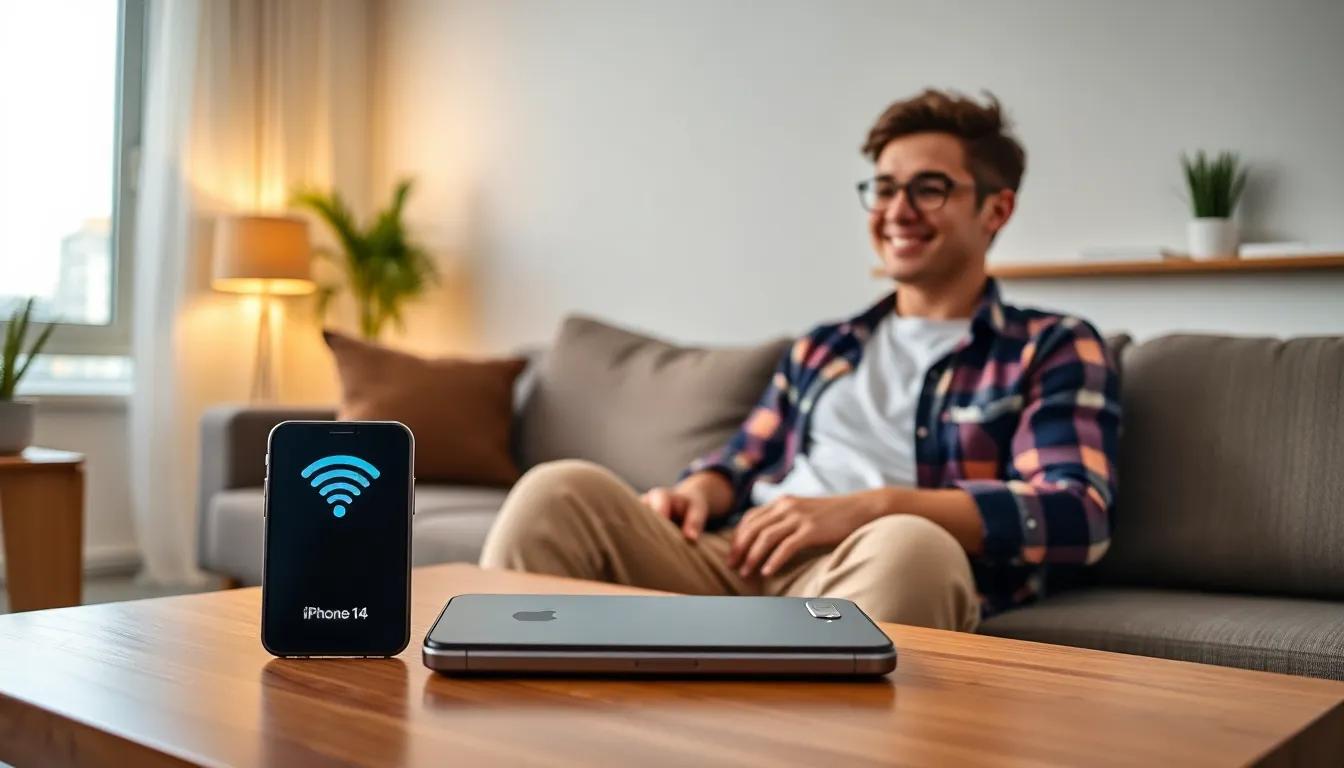
iPhones show varying levels of compatibility with 6GHz Wi-Fi, depending on their model and specifications.
iPhone Models that Support 6GHz
Only select iPhone models are capable of connecting to 6GHz Wi-Fi. The iPhone 13 series and later models, including the iPhone 14 and iPhone 15, can utilize this frequency due to their support for Wi-Fi 6E features. Each of these models incorporates upgraded chipsets that enable access to the higher frequency band, promoting improved connectivity and performance. Users aiming to leverage the benefits of 6GHz support should confirm their device’s capability.
Technical Specifications of 6GHz WiFi
6GHz Wi-Fi operates on the 12GHz frequency range, providing a significant improvement in speed and reliability. Under ideal conditions, it can achieve maximum theoretical speeds of 9.6 Gbps. This robust standard also minimizes interference through additional channels, allowing more devices to connect efficiently. Wi-Fi 6E extends the benefits of Wi-Fi 6, offering advancements like better data management and enhanced security protocols. Users connecting compatible devices experience reduced latency and smoother online activities, making 6GHz Wi-Fi particularly appealing.
Benefits of Using 6GHz WiFi
6GHz Wi-Fi offers numerous advantages, particularly in enhancing connectivity experiences. Users can expect significant improvements in speed and interference reduction.
Higher Speeds
Higher speeds become a reality with 6GHz Wi-Fi. Under optimal conditions, this technology delivers data rates up to 9.6 Gbps. Devices supporting this frequency enjoy faster downloads, smooth video streaming, and improved online gaming experiences. Latency decreases, resulting in quicker response times during real-time activities. Consequently, multiple users can connect without compromising speed. Greater bandwidth allows for increased device connectivity, making it ideal for homes or offices with numerous smart devices.
Reduced Interference
Reduced interference significantly enhances overall network performance. Operating in the 6GHz band minimizes congestion compared to traditional 2.4GHz and 5GHz bands. Fewer devices operate on the 6GHz frequency, resulting in less signal overlap and better stability. Users experience more reliable connections, even in crowded environments like apartments or office buildings. This stability enables uninterrupted conferencing and seamless streaming, enhancing productivity and enjoyment. With fewer disruptions, 6GHz Wi-Fi ensures consistent and robust internet access.
Potential Issues with 6GHz WiFi on iPhone
While 6GHz Wi-Fi brings numerous advantages, potential issues may arise for iPhone users. Understanding these challenges can help in troubleshooting.
Connectivity Problems
Connectivity issues may occur for some iPhone users trying to connect to 6GHz Wi-Fi. In crowded environments, interference from other electronic devices can hinder performance. Network configuration might also play a role, as routers require proper settings to support 6GHz connections. Users may experience sporadic connections or difficulties in maintaining a stable link. Ensuring the router firmware is up to date can resolve many of these issues. Compatibility with existing devices can also impact the ability to connect. If other devices on the network lack support for Wi-Fi 6E, it could result in degraded performance across the network.
Range Limitations
Range limitations can impact the effectiveness of 6GHz Wi-Fi on iPhones. The higher frequency provides faster speeds but often at shorter distances. Walls, furniture, and other physical barriers can attenuate signals, diminishing connection quality. Shifting away from the router might lead to dropped connections or reduced speeds. Users may find that, unlike 2.4GHz networks, 6GHz coverage decreases significantly outside the immediate vicinity of the router. Indoor environments may also see limited reach. A Wi-Fi 6E compatible mesh system can extend coverage and enhance connectivity, ensuring better service throughout a larger space.
The potential for iPhones to connect to 6GHz Wi-Fi marks an exciting advancement in mobile technology. With models like the iPhone 13 and later supporting Wi-Fi 6E, users can experience significantly faster speeds and reduced interference. This capability not only enhances streaming and gaming but also improves overall connectivity in crowded environments.
As users embrace this new technology, understanding device compatibility and potential challenges is crucial. By ensuring their routers are updated and considering mesh systems for coverage, iPhone users can fully leverage the benefits of 6GHz Wi-Fi. The future of connectivity looks promising as more devices become compatible, paving the way for a seamless online experience.